Thoughts on Being an Author in the Age of AI
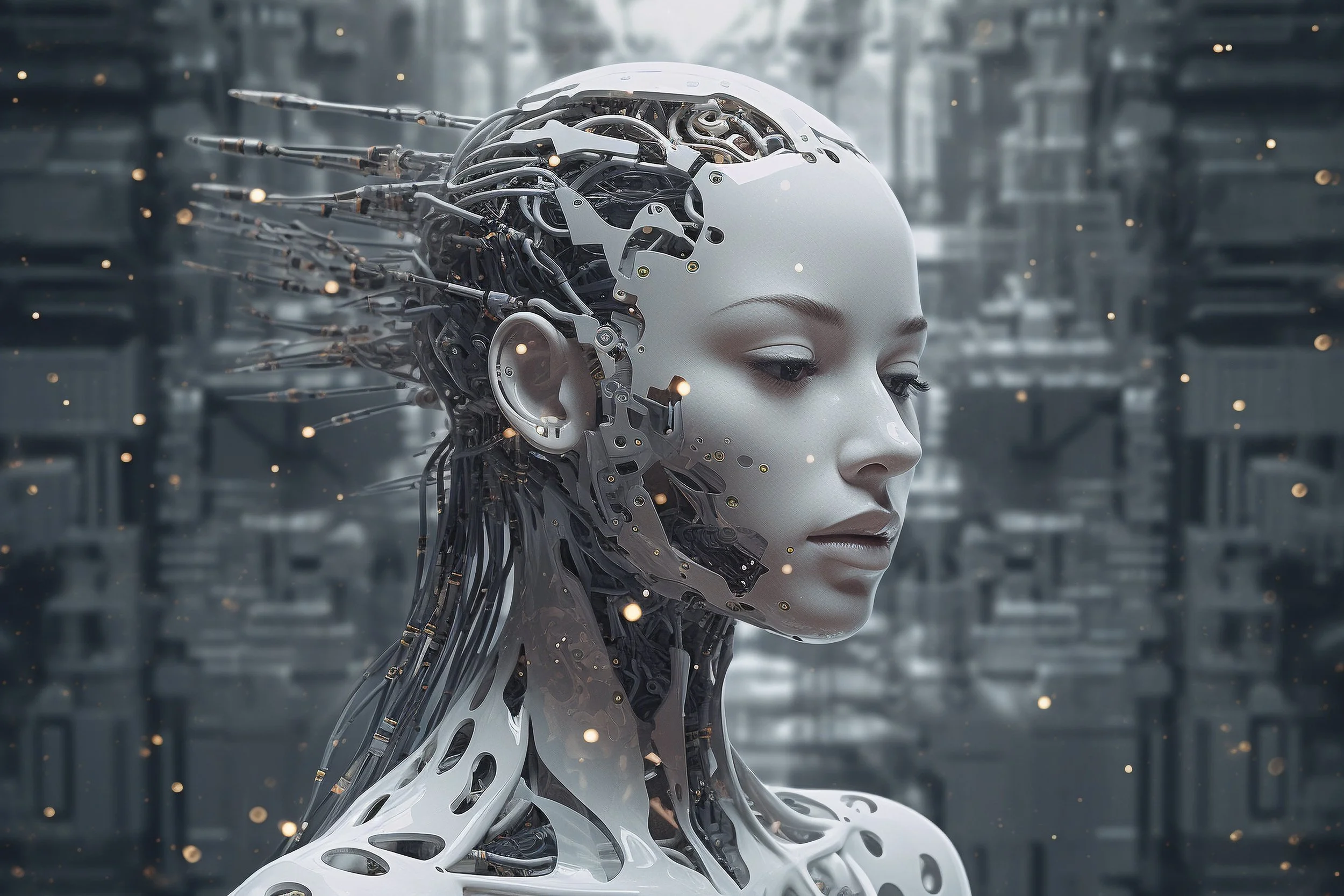
Image by Alexander Koch on Pixabay
My novelist sister came for a visit last month, and the first thing she said to me was, “I need that t-shirt.” Why? My t-shirt read, “Em-Dash Preservation Society, Established Long Before AI.”
If the situation had been reversed and she had been wearing that particular shirt, I would’ve said exactly what she said.
Yes, I’ve been accused of using generative AI. I’d used em-dashes in my landing page copy. The IT guy I contacted to help me figure out how to reside photos on Square Space greeted me by saying, “Oh, I see you use AI to write.”
Uh, no. I’ve been writing with em-dashes for years. My writing is human conceived and crafted. But sadly, the list of “signs” that generative AI has been used is long and growing and includes em-dashes along with such standbys as the rule of three and negative-positive parallelism.
Keep in mind, these LLMs (large language models) trained on what humans wrote, and in many cases, what is copyrighted. It makes sense AI will ape what humans wrote first. For the curious, check out the Anthropic Copyright Settlement.
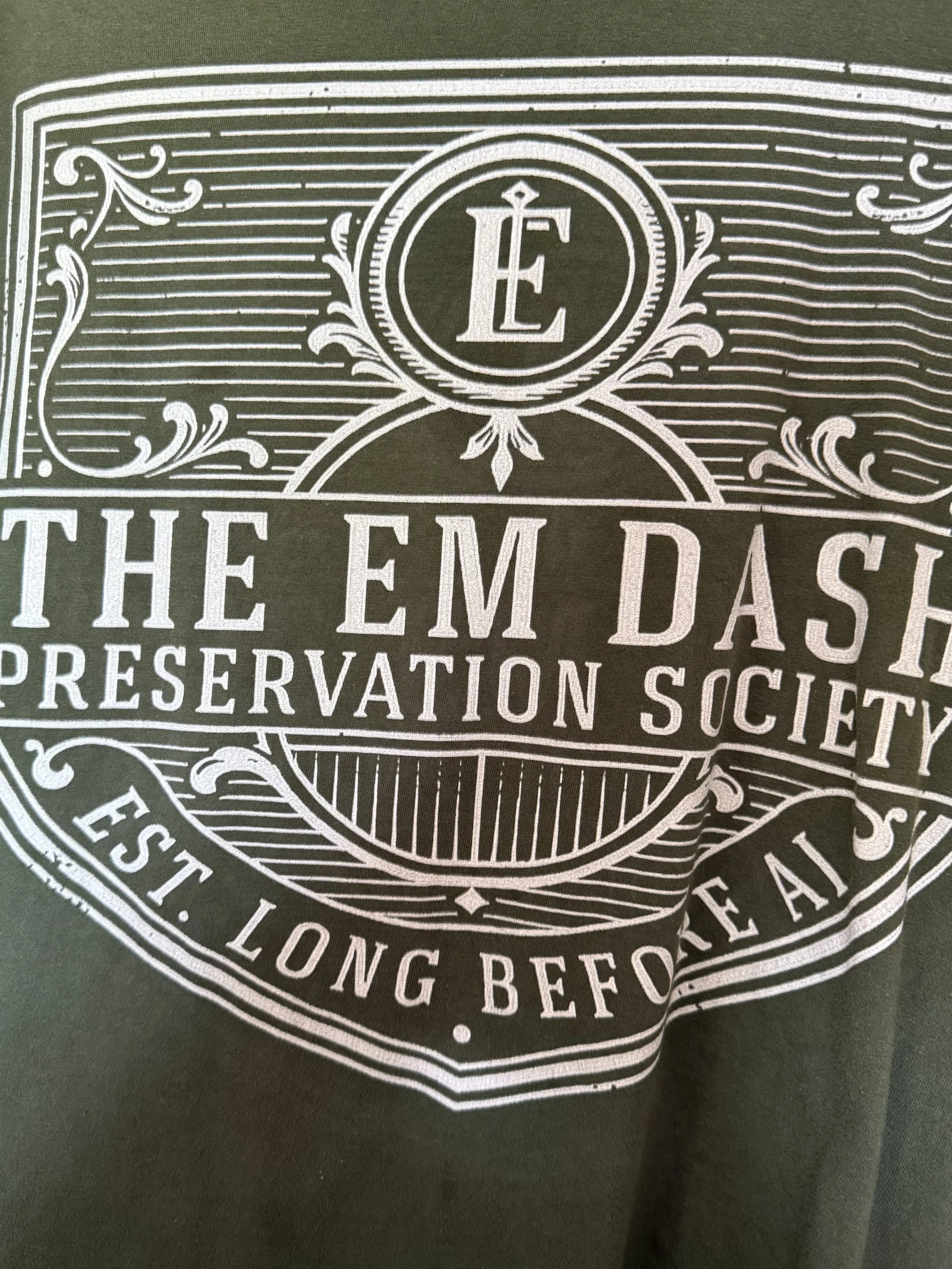
What my t-shirt says.
Is it human or is it AI?
Along comes the software that purports to answer this question. Pangram is the current standard and claims it can accurately identify AI vs. human writing nearly one hundred percent of the time.
Same problem in differentiating between machine and human. AI was trained on fully human-created writing. As far as I know, there isn’t a foolproof AI detector.
Take the rule of three. I learned to use that prose construct in the fifth grade. Back in 1957, my teacher insisted it was a sign of good writing, decades before AI. Although we’ve been writing about ways to get machines to do our work—and the consequences—since the beginning of the sci-fi genre. For a look at early notions of artificial intelligence, try Erewhon by Samuel Butler (1872).
Image by Hello Cdd20 from Pixabay
Daggermouth
Based on reports found online, Pangram tags this best-seller by H. M. Wolf as sixty percent AI generated. Oddly enough, since AI written work is said to be dreadful, Daggermouth has more than forty-six thousand ratings, with ninety-two percent rated four or five stars (out of five) on Amazon. So, wow. I guess humans can’t tell whether who (human) or what (AI) wrote it.
Was it that good? I had to read Daggermouth, although honestly, it’s also my kind of book, mostly a dark dystopian story involving morally gray characters, a forced marriage, and feminine rage.
I thought it generally well written. Not deathless prose, but definitely an entertaining read with an intriguing premise.
Image by Anne-marie Ridderhof from Pixabay
The Atlantic and Substack Weigh In
In the Atlantic, Will Oremus asks the burning question, Is This What Comes After AI Slop? The thrust of the article is, to my mind, amazement that something as good as Daggermouth, or maybe this popular, came out of a partially AI-created novel.
But, Anne on Substack begs to differ. She writes, “In Daggermouth, I found no echo of a human thought.” So, hmm. Did forty-six thousand readers get it wrong?
Image by Felix Martinez on Pixabay
My Bottom Line
The use of AI to write novels is disheartening. Writing is what I do and have always done. After thirty years as a tech writer and the last seven years writing short fiction, I’d hate to be replaced by a machine.
What worries me is the possibility that AI will quickly learn to ape humans so well that differentiating between human and machine becomes not just questionable but impossible.
I won’t (and don’t) use AI in writing, not even the more-or-less useful grammar checks I paid for back before this blew up into a thing. I work hard to never use AI generated art or photography. The images that aren’t mine generally come from Pixabay.com, which has helpfully been noting whether the creator used AI to produce an image.
I imagine, though, that AI will find ways to sneak in. You know, the way typos do. My biggest fear? Like the Borg on Star Trek, AI will tell us, “Resistance is futile.”
What’s Next?
Look for the Newsletter (all I need is your email) on September 20
and the Blog on September 30.
